

TL;DR
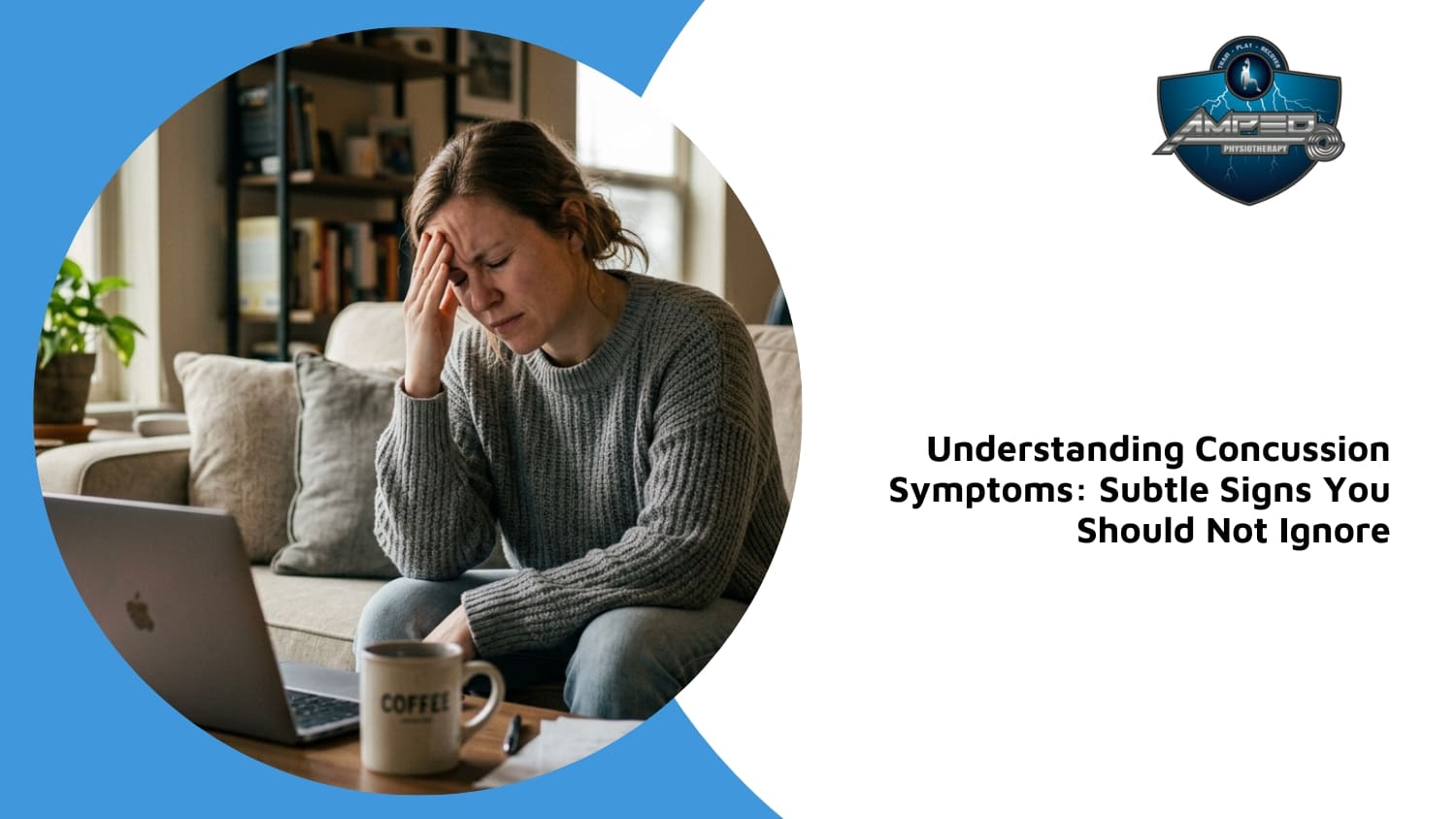
Concussion symptoms do not always look dramatic. Physical signs like headaches and dizziness, cognitive signs like brain fog and memory lapses, and emotional signs like irritability and anxiety often get dismissed as stress or fatigue, especially in active people. If you notice symptoms that started after a head impact, fall, collision, or sudden jolt, a structured assessment gives you a clearer picture of what is happening and what to do next.
───────────────────────────────────────────────────────
Introduction
Most people picture a concussion as someone getting knocked out cold. The reality is far more subtle, and that subtlety is exactly what makes it easy to miss. You might feel a little off after a fall, a rough collision on the field, or even a car stop that jerked your head forward. You chalk it up to a bad night’s sleep or a stressful week. You push through. Then a few days later, the grocery store feels overwhelming, you lose your train of thought mid-sentence, and you snap at someone for no clear reason.
That pattern deserves your attention. Understanding concussion symptoms by category, physical, cognitive, and emotional, takes a confusing experience and gives it structure. When you know what to look for, you know when to pause, when to track, and when to seek guidance. This post walks through the full picture so you are not left guessing.
Why Are Concussion Symptoms Easy to Miss?
Symptoms do not always show up immediately. According to the Mayo Clinic, some concussion symptoms appear right away while others develop over hours or days after the initial injury. That delay makes it easy to disconnect how you feel from what caused it.
One of the most common misconceptions is that a concussion requires a loss of consciousness. It does not. You do not need to black out for a head impact to affect how your brain functions. Many people walk off the field, finish their shift, or drive home and only notice something is wrong later in the day.
The early signs of a concussion are also easy to rationalize. Slower reaction time gets blamed on a hard training week. Needing more breaks gets attributed to poor sleep. Feeling overwhelmed in a busy coffee shop gets written off as stress. These are not random complaints. They are patterns worth paying attention to, particularly when they follow an impact or sudden head movement.
The goal here is not alarm. It is awareness. Knowing your baseline and recognizing a change from it is the first step toward taking care of yourself properly.
What Are the Physical Symptoms of a Concussion?
Physical symptoms are often the most noticeable, though they do not always feel dramatic. The CDC HEADS UP program lists common physical symptoms including headache, dizziness, nausea, balance difficulties, blurred or double vision, light sensitivity, noise sensitivity, and fatigue.
In daily life, these show up in ways that feel frustratingly ordinary. You might get a headache during two hours of computer work that never bothered you before. Fluorescent lights at the grocery store feel painfully bright. Stairs feel slightly off-balance. A short drive leaves you feeling nauseated. These are not complaints to dismiss. They are data points.
It is worth knowing that symptom intensity is not fixed. Physical symptoms often fluctuate with exertion, screen time, sleep quality, hydration, and stress. A good morning does not mean you are fully recovered, and a rough afternoon does not mean you are getting worse. This is why tracking what triggers symptoms and what settles them gives you, and a healthcare provider, genuinely useful information.
The neck, vestibular system (the inner ear system responsible for balance and spatial orientation), and visual system all contribute to how concussion symptoms feel and how long they persist. This is one of the reasons an individualized assessment is more useful than a one-size approach. Our concussion services in Ottawa include targeted rehabilitation for vestibular, oculomotor, and cervical spine involvement, because these systems frequently need direct attention to support recovery.
Returning to movement is usually part of recovery, but it needs structure. An all-or-nothing approach, either complete bed rest or jumping back to full training, does not serve you well. Pacing physical activity within your current tolerance, and adjusting based on symptom response, is a more realistic and sustainable path.
What Are the Cognitive Symptoms After a Concussion?
Cognitive symptoms are real even when no one else can see them, and they are frequently underreported because they are easy to dismiss as tiredness or distraction.
Common cognitive symptoms after a concussion include trouble concentrating, slower mental processing, memory lapses, difficulty following multi-step conversations, reduced tolerance for multitasking, and significant mental fatigue after tasks that used to feel effortless. MedlinePlus notes that these thinking and memory difficulties are well-recognized features of concussion recovery.
In practical terms: you reread the same paragraph three times and nothing sticks. You forget a simple instruction someone gave you five minutes ago. A short meeting leaves you feeling mentally exhausted. You lose your place mid-task repeatedly. For athletes, cognitive symptoms affect training strategy, in-game decision-making, and reaction time. For students and professionals, they affect focus, output, and confidence.
Tracking cognitive symptoms with context helps. Note what activity triggered them, how long the symptoms lasted, and what helped them settle. This kind of information shapes a return-to-learn or return-to-work plan that is realistic rather than arbitrary.
What Are the Emotional Symptoms of a Concussion?
Emotional changes are among the most overlooked concussion symptoms, often because they feel personal rather than medical.
After a concussion, people frequently experience irritability, low mood, heightened anxiety, reduced stress tolerance, and feeling unusually reactive in situations that would not normally bother them. These changes connect directly to the brain’s recovery demands. They are also shaped by disrupted sleep, pain, uncertainty about recovery timelines, and, for athletes, the loss of training routine and competition.
Being pulled from sport, modifying workouts, or stepping back from team activities is genuinely difficult. That frustration is valid. Feeling emotional during concussion recovery does not mean you are overreacting. It means your brain is working harder than usual and your normal outlets are temporarily limited.
One practical note: when you come in for an assessment, mention emotional changes alongside headaches and dizziness. Emotional symptoms are part of the clinical picture. Leaving them out gives an incomplete view of where you are in your recovery.
What Triggers Symptoms That People Do Not Expect?
Sleep disruption, screen exposure, bright lights, loud environments, and visually busy spaces can all amplify concussion symptoms, and most people do not connect these triggers to their recovery until someone points them out.
Common daily triggers include scrolling on a phone before bed, working under fluorescent lighting, watching fast-moving video content, commuting in heavy traffic, being in a crowded gym, or sitting in a noisy restaurant. None of these feel like “exertion,” but for a recovering brain, they all add up.
“Just rest” is advice that sounds helpful but is often too vague to be useful. What you actually need is a clear plan for managing cognitive load, physical activity, and sensory exposure in a proportional, structured way. That requires knowing your current tolerance and adjusting gradually as symptoms settle.
Tracking practical details helps: your screen tolerance before symptoms increase, your sleep quality and duration, what time of day symptoms spike, and how long it takes to recover after a given activity. This information guides real decisions, rather than leaving you guessing at what to reduce or when to push.
For more on what structured, movement-based concussion recovery looks like, this overview of active concussion rehabilitation in Ottawa walks through the approach in practical terms.
When Should You Seek Help for Concussion Symptoms?
Some situations call for immediate emergency care. Seek urgent medical attention if you experience any of the following:
• A headache that keeps worsening rather than improving
• Repeated vomiting
• Seizure or convulsion
• Increasing confusion or disorientation
• Slurred speech
• Weakness or numbness in your limbs
• Unequal pupil size
• Loss of consciousness
• Symptoms that escalate rapidly
Outside of those red flags, you should seek professional guidance if symptoms persist, interfere with your ability to work, study, train, or compete, or increase with normal daily activity. Waiting to “see how it goes” without structure rarely produces a clear answer and often delays recovery.
Athletes should not return to contact sport, high-speed drills, or competition based solely on how they feel in a given moment. A structured, evidence-based return-to-sport process involves objective assessment, exercise stress testing, and phased progression, not a gut check on a good morning.
For active people in Ottawa, local assessment gives you a clear starting point when symptoms feel unpredictable. We use pre-season baseline data, the Concussion Tracker app for symptom monitoring, and a phased recovery approach that coordinates with your doctor, coach, school, or workplace as needed. The process is built around your actual situation, not a generic protocol.
Key Takeaways
• You do not need to lose consciousness to have a concussion. Symptoms after an impact, fall, or sudden jolt should be taken seriously regardless of whether you blacked out.
• Physical symptoms of a concussion include headache, dizziness, nausea, light sensitivity, noise sensitivity, balance changes, and fatigue, and they often fluctuate with activity, sleep, and screen exposure.
• Cognitive symptoms after a concussion, including brain fog, memory lapses, and reduced focus, are real clinical signs even when no one else can observe them.
• Emotional changes like irritability, anxiety, and low mood are recognized concussion symptoms connected to the brain’s recovery demands, not signs of weakness.
• Common daily triggers like screen use, fluorescent lighting, noisy environments, and commuting can amplify symptoms in ways that are easy to overlook.
• A structured assessment with symptom tracking and phased return-to-activity planning gives you a more reliable recovery path than rest alone or guesswork about when to push.
Take the Next Step with a Structured Concussion Assessment
If you feel foggy, dizzy, irritable, or unusually drained after a head impact, body collision, fall, or sudden jolt, do not rely on guesswork or wait for symptoms to sort themselves out on their own.
A concussion assessment gives you a clear picture of your current symptom patterns, your tolerance for physical and cognitive activity, and what needs to be modified before you return to training, work, or sport. The approach at Amped Physiotherapy is individualized, movement-focused, and built around realistic planning for active people who want to return to what they do with confidence and control.
Book your assessment in Ottawa and take the first step toward a structured, organized recovery.
Frequently Asked Questions
Can I have a concussion if I did not black out?
Yes. Loss of consciousness is not required for concussion symptoms to occur. Headache, dizziness, brain fog, nausea, light sensitivity, or emotional changes after an impact or jolt are all worth taking seriously, regardless of whether you lost consciousness.
How do I know if my symptoms are from a concussion or just fatigue?
Look for a clear change from your normal baseline, particularly symptoms that started after an impact, fall, collision, or sudden head movement. If your symptoms increase with screen use, physical activity, concentration, or busy environments, that pattern warrants a professional assessment rather than a wait-and-see approach.
When should I get help for concussion symptoms?
Seek emergency care immediately for red flags such as a worsening headache, repeated vomiting, confusion, slurred speech, limb weakness, seizure, or symptoms that escalate rapidly. If symptoms persist beyond a few days, interfere with your ability to work, study, train, or compete, or increase with normal daily activity, an assessment gives you a clearer and safer path forward.